

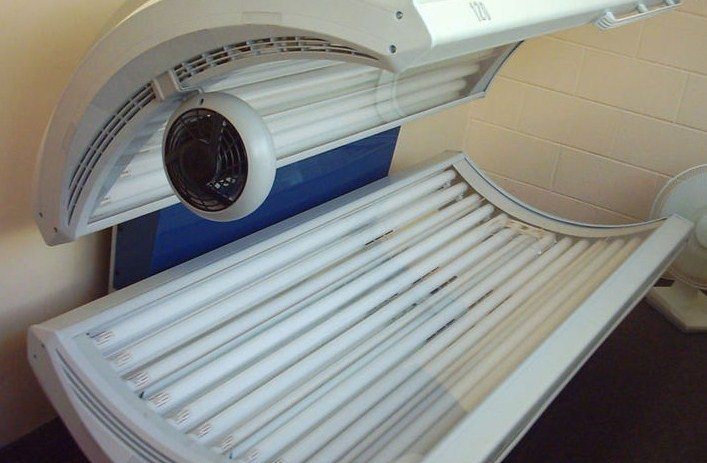
The Bergen County Department of Health Services, in conjunction with the Bergen County Cancer Coalition, cautions parents who provide written consent for their children to use indoor tanning facilities to carefully reconsider their approval. According to the National Cancer Institute (NCI), exposure to ultraviolet (UV) radiation, whether from the sun or from artificial sources such as sunlamps used in tanning beds, increases the risk of developing skin cancer.
Under current New Jersey state law, children under 14 years of age are prohibited from using a tanning facility. A person who is at least 14 but less than 18 years of age may use a tanning facility with the written authorization of the person’s parent or legal guardian indicating that the parent or guardian has read and understood the safety standards and warnings of the use of tanning beds.
In July 2009, the International Agency for Research on Cancer (IARC), part of the World Health Organization, concluded that there is convincing evidence of an association between the use of indoor tanning equipment and the risk of melanoma, the deadliest form of skin cancer. In addition to the risk of developing squamous cell carcinoma and melanoma skin cancers, indoor and outdoor tanning can cause skin damage that can lead to premature aging, and irreversible damage to the eyes.
Tanning beds, which are very popular with teenagers, emit both UV-A and UV-B radiation, which can damage the skin and can lead to skin cancer. Teenagers are at special risk for developing skin cancer because their bodies are undergoing such accelerated growth rates that their cells are more prone to the damage of the UV radiation.
Adults who use tanning salons are also at risk for the development of skin cancer. According to the IARC, the risk of melanoma of the skin increased by 75% when tanning bed use started before age 35. The American Academy of Dermatology reports that melanoma is the second most common cancer in women 20 to 29 years old. The NCI reports that women who use tanning beds more than once a month are 55% more likely to develop melanoma.
Tanning salon advocates argue that indoor tanning is less dangerous than tanning outdoors because the intensity of UV radiation and the time spent tanning can be controlled. However, there is no evidence to support those claims. Some tanning salons may promote that the tanning bed is a safe way to get the recommended amount of vitamin D. This vitamin should be secured safely through a healthy diet that includes vitamin supplements, not from a tanning bed!
For more information on indoor tanning and UV rays, visit the website of the U.S. Food and Drug Administration at www.fda.gov .
The Bergen County Cancer Coalition is funded through a grant from the New Jersey Department of Health & Senior Services’ Office of Cancer Control and Prevention (OCCP). For more information on Comprehensive Cancer Control in New Jersey, visit: www.njcancer.gov
Read more healthy living news on mybergen.com.