
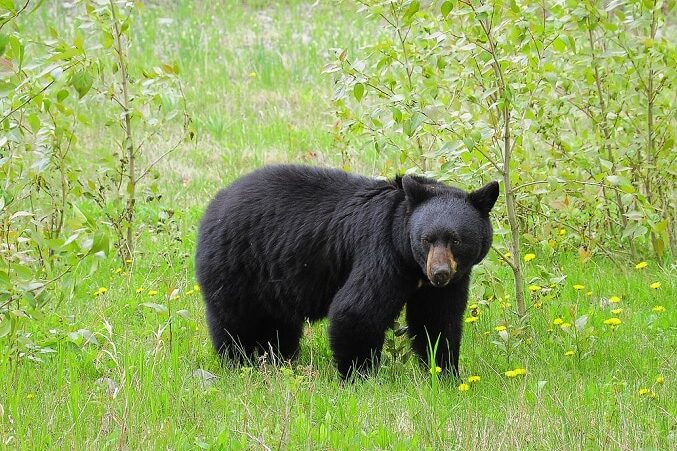
Black bear sightings continue across Bergen County and nearby North Jersey communities in 2026 as bears emerge from wooded areas and move through residential neighborhoods searching for food.
During the spring of 2026, black bears were reported in Bergen County communities, including Saddle River, Englewood, Teaneck, Tenafly, Oakland, Mahwah, and nearby North Jersey towns. Residents have reported bears wandering through neighborhoods, climbing trees, crossing local roads, and moving through residential properties.
According to the New Jersey Department of Environmental Protection (NJDEP) Division of Fish & Wildlife, black bear activity continues to be reported across multiple New Jersey counties during the spring and early summer months when bears become more active searching for food.
Wildlife officials say unsecured garbage, bird feeders, pet food, outdoor grills, and other easily accessible food sources remain among the biggest reasons bears enter suburban neighborhoods.
For many Bergen County residents, black bear sightings are no longer limited to remote hiking areas or wooded mountain communities. Bears are increasingly being seen in residential neighborhoods, near parks, and in densely populated suburban areas throughout North Jersey.
Recent Black Bear Activity in New Jersey
The NJDEP Division of Fish & Wildlife continues monitoring black bear sightings, nuisance activity, and property damage reports throughout New Jersey.
State bear activity reports released in April 2026 include incidents involving garbage-related activity, nuisance complaints, sightings near homes, home entries, injured bears, and vehicle strikes across multiple New Jersey counties, including Bergen County and other parts of North Jersey.
Wildlife officials continue to remind residents that preventing bears from accessing food sources is one of the most effective ways to reduce dangerous encounters.
The NJDEP also notes that some incidents involving black bears may be handled directly by local police departments and may not appear in statewide reporting totals.
Black Bears Are Being Seen in Bergen County Neighborhoods

Recent black bear sightings in Bergen County have included bears roaming residential streets, climbing trees, crossing local roadways, and moving through suburban neighborhoods.
Sightings and activity have recently been reported in communities including:
• Saddle River
• Englewood
• Teaneck
• Tenafly
• Oakland
• Mahwah
Wildlife officials say bears often travel through neighborhoods while searching for food and will frequently move on if they do not find accessible attractants.
Residents are encouraged to secure garbage cans, remove bird feeders if bears are active nearby, keep pet food indoors, and avoid leaving food sources outside overnight.
Whether you’re hiking through Ramapo Valley County Reservation, spending time outdoors with family, or simply enjoying your backyard, understanding black bear safety has become increasingly important for North Jersey residents.
New Jersey’s Black Bear Population Continues to Expand
According to the New Jersey Department of Environmental Protection (NJDEP), black bears are now found throughout all 21 counties in New Jersey, although the largest concentrations remain in the northwestern part of the state. State wildlife officials estimate New Jersey’s black bear population to be around 3,000 bears, with increasing sightings reported in suburban and residential communities across North Jersey in recent years. Wildlife experts say expanding bear populations, changing food patterns, and continued development near wooded areas have all contributed to more frequent encounters between bears and residents.
Why Responsible Coexistence Matters

While black bears are generally cautious around humans and are not typically aggressive, they are still large and powerful wild animals capable of causing injury if they feel threatened, cornered, or are protecting food sources.
As black bears continue moving into suburban settings, public education and prevention have become increasingly important.
Improperly stored garbage remains one of the leading reasons bears repeatedly return to neighborhoods. Wildlife experts warn that once a bear becomes conditioned to human food sources, it can create dangerous situations for both residents and the animal itself.
Learning how to reduce attractants and respond appropriately during bear encounters helps protect people, pets, and wildlife.
Are Black Bears Dangerous?
Actual black bear attacks on humans remain rare, but they can occur.
In 2014, a Rutgers University student was killed during a black bear attack while hiking in West Milford. According to state wildlife officials, this was the first fatal black bear attack reported in New Jersey in more than 150 years.
According to the NJ Division of Fish & Wildlife, black bears usually avoid direct confrontations with humans. When threatened, bears may make bluff charges, huffing noises, jaw-popping sounds, or swat the ground with their paws as warning behaviors.
Residents should never assume a bear is harmless or approach a black bear under any circumstances.
Wildlife officials also advise that if a black bear does attack, fighting back may improve the victim’s chances of survival.
Most black bear attacks in the United States occur in forested areas, parks, or campgrounds where bears have become accustomed to human food sources and frequent human interaction.
What to Do if You Encounter a Black Bear
Black bears are generally wary of humans and will often leave the area on their own. However, residents and hikers should still take every bear encounter seriously.
The New Jersey Department of Environmental Protection Division of Fish & Wildlife recommends the following safety tips if you encounter a black bear:
• Never run from a bear. Slowly back away while remaining calm.
• Avoid direct eye contact, which may be interpreted as a threat or challenge.
• Make noise by yelling, clapping, banging objects together, or using an air horn.
• Make yourself appear larger by raising your arms and standing close together if you are with other people.
• Give the bear a clear escape route.
• If the bear huffs, pops its jaws, or swats the ground, slowly back away. These are warning behaviors indicating you are too close.
• Bears standing on their hind legs are often trying to get a better view or smell the air and are not necessarily acting aggressively.
• If a bear bluff charges, stand your ground and slowly continue backing away without running.
• Move to a secure area if the bear does not leave.
• If a bear enters your home, provide an escape route by opening doors if it is safe to do so.
• Never feed or approach a black bear.
• If a black bear attacks, fight back.
• Report aggressive behavior, property damage, or nuisance bear activity to the DEP hotline at 1-877-WARN-DEP (1-877-927-6337).
How to Prevent Bears From Coming Onto Your Property

Wildlife officials recommend taking proactive steps to reduce bear attractants around homes and neighborhoods.
Tips include:
• Secure garbage in tightly closed containers and place trash outside only when necessary.
• Remove bird feeders during active bear months if bears are present nearby.
• Keep pet food indoors.
• Clean outdoor grills after use.
• Avoid leaving food, coolers, or scented items outdoors.
• Keep garage doors closed when garbage is stored inside.
• Teach children how to respond safely if they encounter wildlife.
Families living in areas with more frequent bear activity, including parts of Mahwah, Oakland, Ringwood, Wayne, and nearby North Jersey communities, may also benefit from establishing a basic family bear safety plan.
Frequently Asked Questions About Black Bears in Bergen County NJ
Are black bears common in Bergen County NJ?
Black bear sightings have become increasingly common in Bergen County and throughout Northern New Jersey. Bears are frequently seen near wooded areas, parks, reservoirs, hiking trails, and suburban residential neighborhoods.
What should you do if you see a black bear in New Jersey?
The NJDEP recommends remaining calm, avoiding direct eye contact, making noise, backing away slowly, and never running from a black bear.
Are black bears dangerous?
Black bears are wild animals and can be dangerous if they feel threatened, cornered, or become accustomed to human food sources. Although attacks are rare, all bear encounters should be taken seriously.
What attracts black bears to neighborhoods?
Garbage, bird feeders, pet food, outdoor grills, and other food sources are among the most common attractants that draw black bears into residential areas.
Is it illegal to feed black bears in New Jersey?
Yes. Intentionally feeding black bears is illegal in New Jersey and may result in fines.
When are black bears most active in New Jersey?
Black bears are typically most active during spring, summer, and fall. Increased sightings often occur during spring and early summer as bears search for food after winter dormancy.
Do black bears hibernate in New Jersey?
Black bears in New Jersey do not technically enter true hibernation.
According to information from the NJ Division of Fish & Wildlife, black bears typically enter a winter dormancy state known as torpor. During this period, a bear’s heart rate, breathing rate, and body temperature decrease significantly.
Black bears may begin entering dens during the fall months. Pregnant females often den earlier than males. Dens can include hollow trees, rock cavities, ground nests, and spaces beneath buildings or structures.
Because black bears in New Jersey experience periods of lighter dormancy, they may occasionally leave dens during warmer winter days in search of food.
Where can I report a black bear sighting in NJ?
Aggressive bear behavior, nuisance activity, or property damage can be reported to the NJDEP hotline at 1-877-WARN-DEP (1-877-927-6337).
More information about black bear safety, prevention, and reporting bear activity in New Jersey is available through the New Jersey Department of Environmental Protection Division of Fish & Wildlife.
Read about coyotes in Bergen County.

Some of our favorite Bergen County nature centers and hiking trails.


